Bringing Joy to Stitch: A Complete Guide to the Baby Monkey Dancing Redwork Embroidery Design
Embroidery has long been a cherished craft, blending technical precision with artistic expression. In recent years, redwork embroidery has seen a significant resurgence, appealing to both nostalgic traditionalists and modern hobbyists who appreciate its clean, minimalist aesthetic. Among the vast array of patterns available today, the Baby Monkey Dancing Redwork design stands out as a particularly charming and versatile option. This article explores the intricacies of this specific design, its technical specifications, and how it fits into the broader world of machine embroidery.
Understanding the Charm of Redwork Embroidery
Before diving into the specifics of the monkey design, it is essential to understand what makes redwork unique. Historically, redwork originated in the late 19th century when Turkey red dye became commercially available and colorfast. Because the dye did not fade easily, it was ideal for outlining designs on white cotton fabric. Today, while we are no longer limited to red thread, the term "redwork" refers to any embroidery done in a single color using simple running stitches or satin stitches to outline a shape.
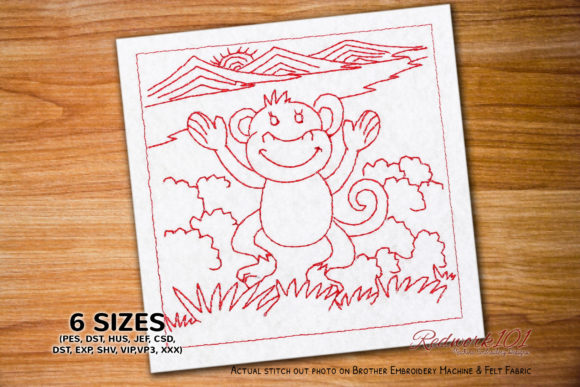
The appeal lies in its simplicity. Unlike complex fill-stitch designs that can take hours to complete and require heavy stabilizers, redwork is fast, efficient, and elegant. The Baby Monkey Dancing Redwork captures this spirit perfectly. It features a playful silhouette of a monkey mid-dance, framed by natural elements like bushes, a radiant sun, and distant mountains. This composition creates a balanced scene that is whimsical yet grounded, making it suitable for a wide variety of projects.
Deconstructing the Design Elements
The visual narrative of this embroidery file is carefully constructed to evoke joy and movement. Let us break down the key components:
- The Dancing Monkey: The central figure is a baby monkey captured in a dynamic pose. The use of outline stitching allows the viewer’s eye to fill in the details, creating a sense of lightness and motion.
- Natural Framing: The monkey is positioned between stylized bushes. These elements provide context, suggesting an outdoor jungle or forest setting without cluttering the design with excessive detail.
- Background Scenery: A sun and mountain range complete the backdrop. These elements add depth to the two-dimensional stitch work, giving the impression of a horizon line and open sky.
This combination of characters and scenery makes the design highly adaptable. It is not just a standalone icon but a complete scene that tells a story. For beginners, this is an excellent example of how simple lines can create a complex emotional response—in this case, happiness and playfulness.
Technical Specifications and Machine Compatibility
One of the most significant advantages of modern digital embroidery designs is their versatility. The Baby Monkey Dancing Redwork design is engineered to be compatible with a wide range of embroidery machines. Whether you are using a high-end commercial multi-needle machine or a entry-level home sewing unit, this design is accessible.
The file package typically includes multiple embroidery file formats. Common formats include:
- PES: Widely used by Brother and Baby Lock machines.
- DST: A universal format compatible with most industrial and many home machines.
- JEF: Specific to Janome models.
- VIP and VP3: Used by Husqvarna Viking and Pfaff systems.
This multi-format approach ensures that users do not need to rely on third-party conversion software, which can sometimes distort stitch density or alter the design's proportions. By providing native files for major brands, the designer ensures that the integrity of the dancing monkey’s outline remains crisp and accurate.
The Optional Stitch Box: To Include or Not?
A common point of confusion for new embroiderers involves the "Stitch Box" mentioned in the design description. In many digital previews, you may see a rectangular box surrounding the design. It is crucial to understand that this outer box is optional and often serves only as a visual guide for placement or hoop size reference.
In most cases, the color of this outer box is different from the actual design threads. If you do not wish to stitch this border, you can simply skip the color step directly on your machine. Most modern embroidery machines allow users to jump over specific color stops. Here is how you can manage this:
- Check the Color Sequence: Before starting, review the color order on your machine’s screen.
- Skip Unwanted Colors: If the first or last color corresponds to the optional box, use the "Skip" or "Jump" function to bypass it.
- Trim Threads: After skipping, ensure you trim any jump stitches neatly to maintain a professional finish.
This flexibility allows you to customize the final look. For a baby blanket, you might prefer the clean look of just the monkey and scenery. For a framed art piece, the box might provide a nice border. The choice is entirely yours, demonstrating the creative control inherent in machine embroidery.
Practical Applications in Daily Life and Creativity
Why choose this specific design? The answer lies in its adaptability across various mediums. The Baby Monkey Dancing Redwork is not limited to one type of fabric or project. Its playful nature makes it ideal for children’s items, while its artistic simplicity appeals to adult crafters.
Consider these practical applications:
1. Nursery Decor and Baby Gifts
The theme of a baby monkey is inherently suited for nurseries. You can embroider this design onto onesies, bibs, or burp cloths. Using soft pastel threads instead of traditional red can customize the piece to match a specific room’s color scheme. The durability of redwork-style stitching also means it holds up well to repeated washing, a crucial factor for baby items.
2. Home Textiles
Imagine this design stitched onto kitchen towels, pillowcases, or even a quilt block. The mountain and sun background adds a touch of nature that fits well in rustic or bohemian home decor styles. Because the design is not overly dense, it does not stiffen the fabric significantly, keeping towels soft and pillows plush.
3. Educational Tools
For educators or parents teaching children about nature or animals, this embroidery can be part of a larger learning activity. Children can help choose the thread colors or learn about the monkey’s habitat while watching the machine work. It bridges the gap between technology and tactile learning.
Common Misconceptions About Machine Embroidery
Despite its popularity, several myths persist about machine embroidery that can deter beginners. Addressing these can help you approach the Baby Monkey Dancing Redwork project with confidence.
Misconception 1: Machine embroidery is too difficult for beginners.
In reality, designs like this redwork pattern are among the easiest to execute. They require minimal stabilization and have low stitch counts, reducing the risk of thread breaks or bird nests. It is an perfect starting point for learning hoop alignment and tension settings.
Misconception 2: You must use red thread.
As mentioned earlier, "redwork" is a style, not a rule. You can use navy blue for a classic look, bright yellow for a cheerful vibe, or even metallic thread for a festive touch. The design’s outline structure works beautifully with any single color.
Misconception 3: All digital files are created equal.
Quality varies significantly. The Baby Monkey Dancing Redwork design is optimized for smooth stitching, meaning the digitizer has carefully planned the path of the needle to minimize jumps and trims. Always look for designs that offer multiple formats and clear instructions, as this indicates a higher level of professional care.
Conclusion
The Baby Monkey Dancing Redwork embroidery design is more than just a digital file; it is an invitation to create joy through craft. Its blend of whimsical imagery and technical accessibility makes it a valuable addition to any embroiderer’s library. Whether you are creating a heartfelt gift for a new parent, adding a personal touch to your home decor, or simply enjoying the meditative process of stitching, this design offers endless possibilities.
By understanding the optional nature of the stitch box, leveraging the multi-format compatibility, and experimenting with different thread colors, you can transform a simple digital pattern into a unique work of art. Embrace the simplicity of redwork, let the monkey dance across your fabric, and discover the satisfaction of bringing a digital design to life with your own hands.